
1. Introduction
Okay, real talk — piccata is one of those words that sounds fancy and Italian and slightly intimidating, but it’s honestly just a fast pan sauce made from butter, lemon, and capers. That’s it. That’s the whole secret.
This version swaps the usual chicken or veal for pork tenderloin, which is honestly the MVP of weeknight proteins — it’s lean, it cooks fast, and it practically begs to be sliced into little medallions and pan-seared until golden. Then you deglaze the pan with white wine and lemon juice, whisk in some butter, toss in briny capers, and suddenly you’ve got a restaurant-worthy sauce that took you ten minutes to make.
Why does this recipe win? It’s fast enough for a Tuesday, elegant enough for guests, and it hits that sweet spot of bright, tangy, buttery, and savory all in one bite. Even picky eaters who think they don’t like capers usually come around once they taste what those little flavor bombs do to a sauce.
2. Ingredients
Here’s your full shopping list. This serves about 4 people.
For the pork:
- 1 pork tenderloin (about 1 to 1.25 lbs), trimmed of silver skin
- ½ cup all-purpose flour, for dredging
- ¾ teaspoon salt, plus more to taste
- ½ teaspoon black pepper, freshly cracked
- 3 tablespoons olive oil (a good extra-virgin like Colavita or California Olive Ranch works great)
- 2 tablespoons unsalted butter, divided
For the piccata sauce:
- 3 cloves garlic, minced
- ½ cup dry white wine (Sauvignon Blanc or Pinot Grigio — nothing sweet)
- ¾ cup low-sodium chicken broth
- 3 tablespoons fresh lemon juice (about 1½ lemons — please, fresh only, not the bottled stuff)
- 2 to 3 tablespoons capers, drained (the small non-pareille capers pack the most flavor per bite)
- 2 tablespoons unsalted butter, cold and cubed (for finishing)
- 2 tablespoons fresh parsley, chopped
- Lemon slices, for garnish
A quick brand note: if you’re going to splurge on one ingredient here, make it the capers. Reese or Mezzetta are both reliably briny and not mushy.
3. Essential Kitchen Tools & Appliances
Before you start, round up:
- A large heavy-bottomed skillet (stainless steel or cast iron — this matters for getting a good sear and those flavorful browned bits for the sauce)
- A meat mallet or the flat bottom of a heavy pan, for pounding the pork medallions
- A sharp chef’s knife
- A sturdy cutting board
- A whisk (for the sauce)
- Measuring cups and spoons
- Tongs
- A citrus juicer or reamer (makes squeezing lemons way less annoying)
- A shallow dish or plate, for dredging the pork in flour
Nothing wild here — if you cook even semi-regularly, you probably have all of this already.
4. Cooking Timing and Preparation Steps
Let’s slow this down step by step so nothing catches you off guard.
Step 1: Slice the pork (5 minutes). Cut the tenderloin crosswise into 1-inch-thick medallions. You should get about 8 to 10 pieces.
Step 2: Pound them out (5 minutes). Place the medallions between two sheets of plastic wrap and pound them to about ½-inch thickness with your mallet. This tenderizes the meat and helps it cook fast and evenly — key for that quick weeknight turnaround.
Step 3: Season and dredge (5 minutes). Season both sides of the pork with salt and pepper. Spread the flour on a plate and dredge each piece lightly, shaking off the excess. This coating is what helps the sauce cling later, so don’t skip it.
Step 4: Prep your sauce ingredients (5 minutes). Mince the garlic, juice your lemons, measure out the wine and broth, and drain your capers. Having everything measured and ready (chefs call this mise en place) matters a lot here because once the pork starts cooking, things move fast.
Total prep time: about 20 minutes.
5. Cooking Instructions
Step 1: Sear the pork (6 to 8 minutes total). Heat the olive oil and 1 tablespoon of butter in your skillet over medium-high heat until shimmering. Working in batches so you don’t crowd the pan, sear the pork medallions for about 2 to 3 minutes per side, until golden brown and cooked through (internal temp of 145°F, checked with a meat thermometer). Transfer to a plate and tent loosely with foil.
Step 2: Build the sauce (5 to 6 minutes). In the same skillet (don’t wipe it out — those browned bits are flavor gold), add the garlic and sauté for about 30 seconds until fragrant. Pour in the white wine and scrape up any browned bits with your whisk. Let it simmer for 2 minutes to cook off the alcohol.
Step 3: Add broth, lemon, and capers (3 minutes). Stir in the chicken broth, lemon juice, and capers. Let the sauce simmer and reduce by about a third, which takes roughly 3 to 4 minutes.
Step 4: Finish with butter (2 minutes). Turn the heat to low and whisk in the cold cubed butter, a piece or two at a time, until the sauce turns glossy and slightly thickened. This step is called “mounting” the sauce, and it’s the secret to that silky, restaurant-style finish. Just don’t let the sauce boil once the butter’s in, or it’ll break.
Step 5: Bring it together (1 minute). Return the pork to the skillet, spoon the sauce over the top, and let everything warm through for a minute.
Secret tip: use a splatter guard or lower your heat when adding wine to an already-hot pan — flare-ups happen if you’re not careful.
6. Serving Suggestions
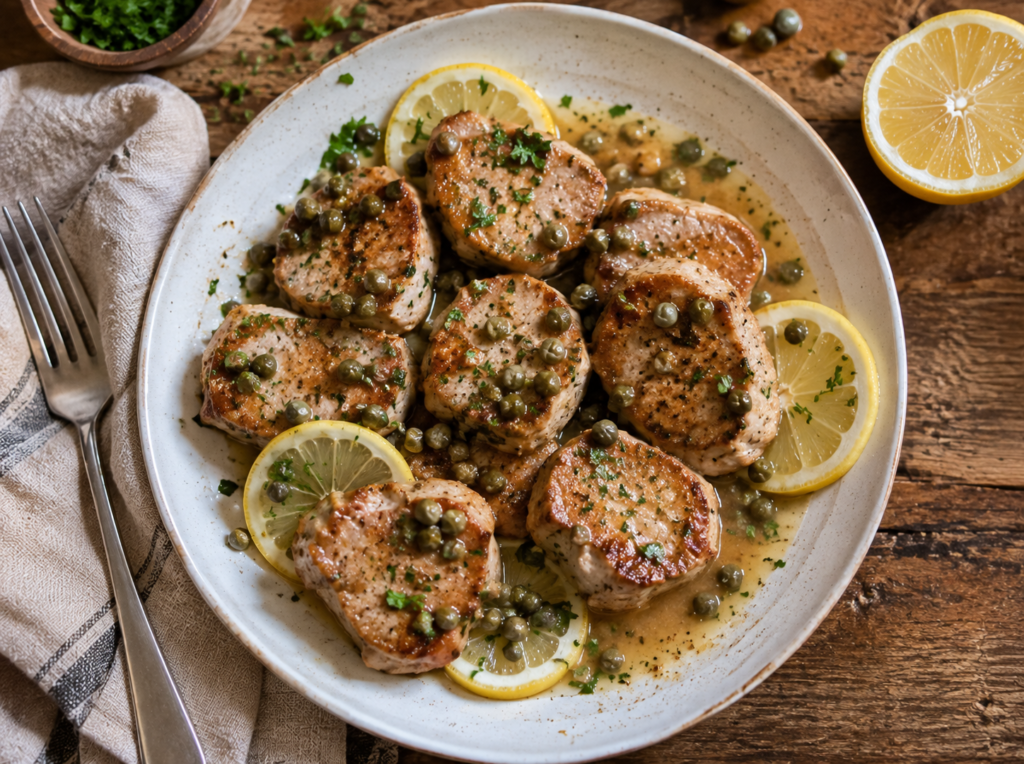
Plate the pork medallions and spoon plenty of that lemon-caper sauce right over the top. Scatter fresh parsley and a few thin lemon slices on top for a pop of color.
Great sides to pair with it:
- Garlic mashed potatoes or creamy polenta (they soak up the sauce beautifully)
- Angel hair pasta tossed in olive oil
- A simple arugula salad with shaved parmesan
- Roasted asparagus or sautéed green beans
A glass of the same white wine you cooked with rounds out the meal nicely.
7. Additional Tips
- Don’t overcook the pork. Tenderloin is lean, so it dries out fast. Pull it at 145°F and let it rest a few minutes.
- Swap the protein. This method works beautifully with chicken breast cutlets or even firm white fish like halibut if you want a change of pace.
- Gluten-free version: Use a 1:1 gluten-free flour blend or cornstarch for dredging.
- Extra flavor boost: A splash of heavy cream at the end turns this into a creamy piccata if you’re craving something richer.
- Low-sodium tweak: Rinse the capers before adding them and use a low-sodium broth to keep the salt in check.
- Make it dairy-free: Swap the butter for a good olive oil or plant-based butter alternative.
8. Nutrition Details
Approximate values per serving (recipe serves 4):
| Nutrient | Amount |
|---|---|
| Calories | 340 kcal |
| Protein | 29g |
| Carbohydrates | 9g |
| Fat | 19g |
| Saturated Fat | 7g |
| Fiber | 0.5g |
| Sugar | 1g |
| Sodium | 480mg |
| Cholesterol | 105mg |
Note: values are estimates and will vary based on exact brands and portion sizes used.
9. FAQ Section
Can I make this ahead of time? The pork is best fresh, but you can prep and dredge it a few hours ahead and keep it covered in the fridge until you’re ready to cook.
How do I store leftovers? Keep leftovers in an airtight container in the fridge for up to 3 days. Reheat gently on the stovetop over low heat so the sauce doesn’t break.
Can I use chicken broth instead of wine? Yes — just swap the wine for an equal amount of broth and add an extra splash of lemon juice to keep that bright, tangy flavor.
What if I don’t have capers? Chopped green olives make a decent substitute, though the flavor will be a bit different — still salty and briny, just less sharp.
Can I freeze this? The sauce doesn’t freeze wonderfully because of the butter, but you can freeze the cooked pork on its own and make a fresh batch of sauce when you’re ready to serve.
How do I make it healthier? Cut the butter down to 1 tablespoon in the sauce and use a light hand with the olive oil in the pan. You’ll lose a little richness but keep all the bright, lemony flavor.
10. Wrap-Up
And that’s Pork Tenderloin Piccata — a dish that sounds like it belongs on a fancy restaurant menu but is genuinely doable on a weeknight in under 40 minutes. The lean pork, the bright lemon, the salty little pops of caper, all tied together with a silky butter sauce. It’s the kind of meal that makes people think you fussed over dinner for hours when really you just knew the right tricks.
Fun fact: piccata actually comes from the Italian word for “larded” or “spiked,” referring to the way the meat is pounded thin and studded with flavor. Italian-American cooks popularized it in the U.S. in the mid-20th century, and it’s been a dinner-party staple ever since — proof that some classics never go out of style.
Give it a try this week. Your dinner table will thank you.