
1. Introduction
Okay, real talk — if you’ve never made gremolata before, you’re about to fall in love with the easiest “secret weapon” in Italian cooking. It’s just three main ingredients: fresh parsley, lemon zest, and garlic, all chopped up together into this bright, punchy little topping. No cooking involved. No fancy skills needed. You just chop and mix.
So why is everyone obsessed with it? Because gremolata takes rich, heavy dishes — think braised short ribs, roasted chicken, grilled fish, even a bowl of pasta — and wakes them right up. That little sprinkle of citrusy, garlicky freshness cuts through all the richness and makes the whole plate taste like you actually know what you’re doing in the kitchen (even if dinner came from a slow cooker). It’s the kind of recipe that takes five minutes but makes people ask “wait, what IS this, it’s so good?”
Traditionally, gremolata is the classic finishing touch for osso buco, but honestly, once you make a batch, you’ll want to put it on everything. Consider this your new go-to move.
2. Ingredients
Here’s your shopping list. This recipe makes about ½ cup of gremolata, enough to top 4-6 servings.
- 1 cup fresh flat-leaf (Italian) parsley, finely chopped — packed tightly before chopping. Flat-leaf has way more flavor than curly parsley, so try to grab that if your store has it.
- Zest of 2 medium lemons (about 2 tablespoons) — a lemon zester makes this so much easier and gives you those super fine, fluffy shreds instead of big bitter chunks.
- 2 large garlic cloves, minced very finely (about 1 ½ teaspoons) — fresh garlic only here, the jarred stuff just doesn’t hit the same.
- ¼ teaspoon kosher salt — a favorite for its clean flavor and easy pinch-ability.
- Optional: 1 tablespoon olive oil — a good extra virgin olive oil helps bind everything together if you want a slightly looser, drizzle-able texture.
- Optional: 1 teaspoon orange zest — some cooks like adding this alongside the lemon for extra depth.
That’s it. Simple ingredient list, huge flavor payoff.
3. Essential Kitchen Tools & Appliances
Nothing fancy required, but having the right tools makes this a genuinely 5-minute job instead of a fumbly 15-minute one.
- Lemon zester — this is the one tool I’d actually recommend investing in. It gives you fine, fluffy lemon zest without any of the bitter white pith.
- Sharp knife — you’ll be doing a lot of chopping, so a sharp knife makes this way easier (and safer) than a dull one.
- Cutting board — a sturdy board gives you room to pile your parsley and rock-chop it properly.
- Small bowl — for tossing everything together at the end.
- Garlic press (optional) — if you want to skip mincing garlic by hand, this speeds things up.
- Measuring spoons — for the salt and any optional add-ins.
4. Cooking Timing and Preparation Steps
Let’s break this down step by step, nice and easy.
Total time: about 10 minutes
Step 1 (2 minutes): Wash your parsley and shake or pat it completely dry. Wet parsley is a nightmare to chop — it just clumps and slides around, so dry it well.
Step 2 (3 minutes): Pull the parsley leaves off the tough stems (the stems are bitter and stringy, so skip them). Pile the leaves on your cutting board and finely chop them until you’ve got about 1 cup, packed.
Step 3 (2 minutes): Zest your lemons using the microplane, going in one direction and rotating the lemon as you go. Stop once you hit the white pith — that part’s bitter.
Step 4 (2 minutes): Mince your garlic as finely as you possibly can. This isn’t a recipe where you want chunky garlic bites — you want it almost paste-like so it distributes evenly.
Step 5 (1 minute): That’s your prep done! Everything should be sitting ready in little piles, waiting to be combined.
5. Cooking/Baking Instructions
Here’s the fun part: there’s no actual cooking here at all. Gremolata is served raw and fresh, which is exactly what keeps it so bright and punchy.
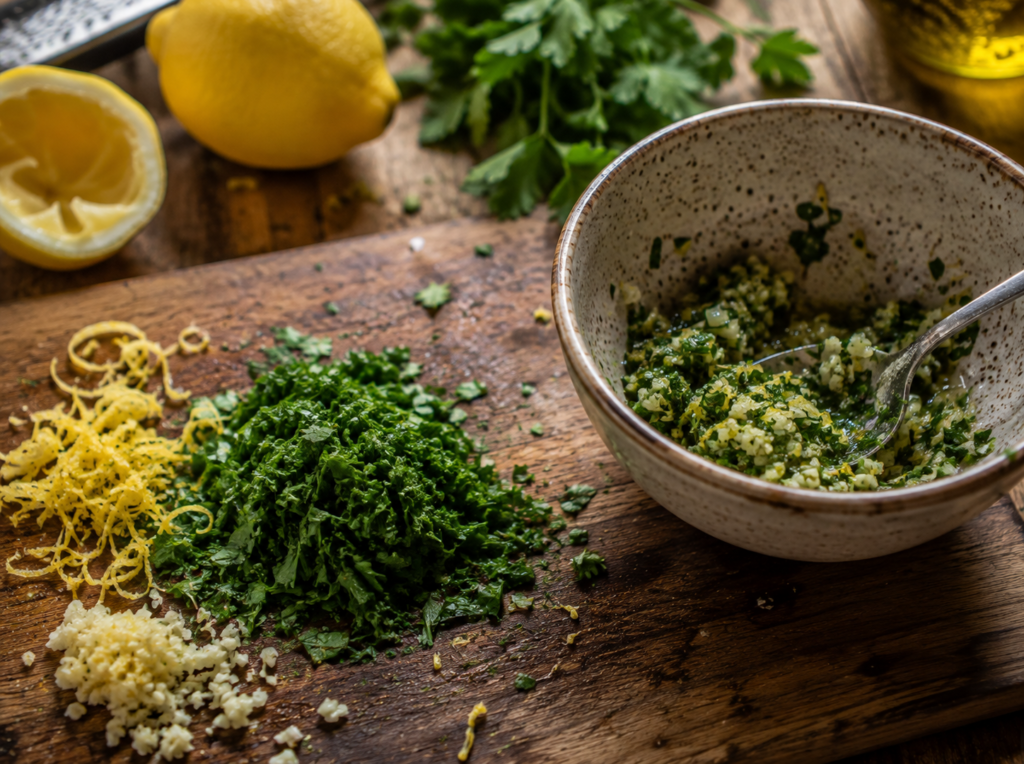
- In your small mixing bowl, combine the chopped parsley, lemon zest, and minced garlic.
- Sprinkle in the kosher salt.
- Toss everything together with a fork or your fingers until it’s evenly mixed and the color is a vibrant, even green.
- If you’re using the optional olive oil or orange zest, stir those in now.
- Taste it! It should hit you with garlic first, then lemon, then that herby freshness right after. Adjust salt if needed.
Secret tip: Make your gremolata right before serving, not hours ahead. The garlic and lemon zest start to mellow out (and honestly get a little funky) if it sits too long. If you need to prep ahead, chop the parsley early but wait to add the garlic and zest until just before you serve.
6. Serving Suggestions
Gremolata is a topping, not a main character, but it makes everything around it shine.
- Spoon it generously over braised short ribs or osso buco — this is the classic pairing for a reason.
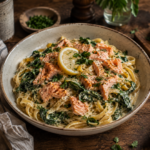
- Sprinkle it over roasted or grilled fish, especially salmon or white fish like cod.
- Finish a bowl of risotto with a spoonful right before serving.
- Toss it into roasted vegetables like potatoes, carrots, or cauliflower for a burst of freshness.
- Stir it into pasta with olive oil for a quick, no-cook sauce.
- Use it to top grilled steak or roasted chicken.
Serve it fresh, right on top of the hot dish so the aroma really opens up.
7. Additional Tips
- Chop by hand, not in a food processor. A food processor bruises the parsley and turns it into a wet, mushy paste instead of light, fluffy bits. Hand-chopping keeps the texture right.
- Use a rocking motion with your knife when chopping parsley — it’s faster and keeps the leaves from bruising.
- Make it your own. Some cooks add a pinch of red pepper flakes for heat, or swap in mint alongside the parsley for a different twist.
- Dietary notes: Gremolata is naturally vegan, gluten-free, dairy-free, and low-carb, so it fits pretty much any diet as-is.
- Double the batch if you’re serving a crowd — it keeps people coming back for more.
8. Nutrition Details
Nutrition per serving (about 2 tablespoons), based on a recipe yielding 6 servings:
| Nutrient | Amount |
|---|---|
| Calories | 8 kcal |
| Protein | 0.4 g |
| Carbohydrates | 1.4 g |
| Fiber | 0.5 g |
| Sugar | 0.2 g |
| Fat | 0.3 g |
| Sodium | 95 mg |
| Vitamin C | 12% DV |
Note: Values are estimates and can vary based on exact ingredients and portion sizes used.
9. FAQ Section
Can I make gremolata ahead of time? You can chop the parsley a few hours ahead and store it in the fridge wrapped in a damp paper towel. But add the garlic and lemon zest right before serving for the best flavor.
How do I store leftovers? Keep leftover gremolata in an airtight container in the fridge for up to 2 days. The flavor fades a bit over time, so it’s really best fresh.
Can I freeze it? Not really recommended — the fresh parsley and zest lose their bright flavor and texture once frozen and thawed.
What can I substitute for parsley? Cilantro or a mix of parsley and mint both work well if you want a different flavor angle.
Is gremolata the same as chimichurri? Nope, they’re cousins, not twins. Chimichurri usually has oil, vinegar, and sometimes oregano and chili, giving it a saucier texture. Gremolata is drier and simpler, built around just parsley, lemon, and garlic.
How do I make it healthier or lower sodium? Just cut back on the salt or skip it entirely — the lemon and garlic still bring plenty of flavor on their own.
10. Wrap-Up
And that’s gremolata — proof that some of the best things in cooking don’t need a recipe card longer than a paragraph. Three humble ingredients, five minutes of chopping, and suddenly your weeknight dinner tastes like something out of a restaurant kitchen.
Fun fact: gremolata comes from Milan, Italy, and was traditionally paired with osso buco alla Milanese specifically to cut through the richness of the slow-braised veal shanks. Over the years, cooks everywhere realized this little trick works on basically anything rich or roasted — and now it’s become a pantry-staple garnish way beyond its Italian roots.
Give it a try tonight. Once you taste what a spoonful of fresh gremolata does to a plain roasted chicken breast, you’ll understand exactly why this humble little chop-and-toss recipe has stuck around for centuries.