
1. Introduction
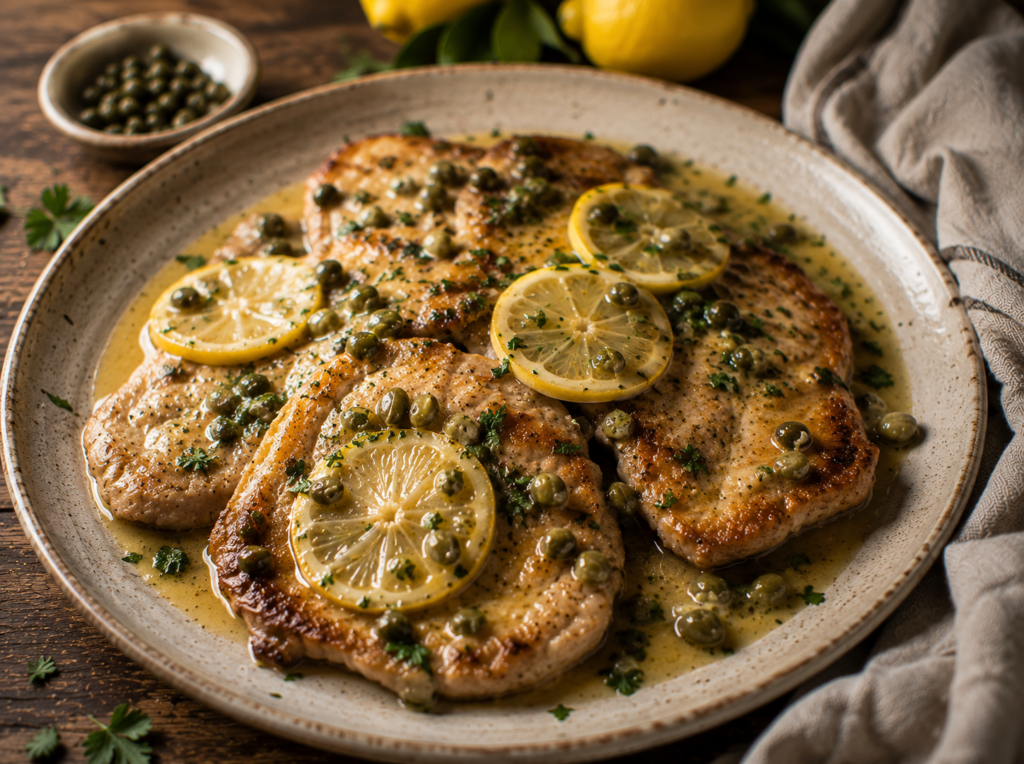
Okay, let’s talk about pork piccata for a second. If you’ve ever had chicken piccata and thought “this is great, but what if it had more flavor and a little more bite,” pork is your answer. Thin-cut pork cutlets get a light dredge, a quick sear, and then get bathed in the most addictive lemon-caper-butter sauce you’ll ever make in one pan.
The whole thing comes together in under 30 minutes, which honestly feels illegal for something that tastes this fancy. It’s bright, buttery, a little tangy from the capers and lemon, and rich enough to feel indulgent without weighing you down. This is one of those recipes that looks like you spent hours on it, but really you just moved fast and used one skillet. Weeknight dinner or “I’m trying to impress someone” dinner — it covers both.
2. Ingredients
For the pork:
- 4 boneless pork loin cutlets (about 1.5 lbs total), pounded to ¼-inch thickness
- ½ cup all-purpose flour
- ½ tsp salt
- ¼ tsp black pepper
- ¼ tsp garlic powder
For the sauce:
- 3 tbsp unsalted butter, divided
- 2 tbsp olive oil
- 3 cloves garlic, minced
- ¾ cup low-sodium chicken broth
- ⅓ cup dry white wine (a sauvignon blanc works great; use extra broth if you’d rather skip alcohol)
- 3 tbsp fresh lemon juice (about 1 large lemon)
- 3 tbsp capers, drained
- 2 tbsp fresh parsley, chopped, for garnish
- Lemon slices, for garnish
Recommended brands: If you want a shortcut, Kirkland or Star capers are briny and consistent. For the wine, you don’t need anything fancy — a $10 Pinot Grigio or Sauvignon Blanc does the job perfectly.
3. Essential Kitchen Tools & Appliances
- Large heavy-bottomed skillet (stainless steel or cast-iron pan sears best)
- Meat mallet or rolling pin (for pounding the cutlets thin)
- Shallow dish or pie plate (for dredging)
- Cutting board
- Sharp chef’s knife
- Tongs
- Citrus juicer
- Measuring cups and measuring spoons
4. Cooking Timing and Preparation Steps
Total time: about 25-30 minutes | Prep time: 10 minutes | Cook time: 15-18 minutes
- Pound the pork. Place cutlets between two sheets of plastic wrap and pound with a mallet until they’re an even ¼-inch thick. This step matters — even thickness means even cooking.
- Season and dredge. Mix the flour, salt, pepper, and garlic powder in a shallow dish. Pat the pork dry with paper towels (this helps the flour stick and helps you get a good sear), then dredge each cutlet in the flour mixture, shaking off the excess.
- Prep your aromatics. Mince the garlic, juice the lemon, and measure out your capers, broth, and wine so they’re ready to go. Piccata sauce comes together fast, so you don’t want to be chopping garlic while butter’s browning.
- Get your pan hot. Heat a large skillet over medium-high heat and let it warm up for a couple of minutes before adding any oil.
5. Cooking Instructions
- Sear the pork. Add 1 tablespoon butter and the olive oil to your hot skillet. Once the butter’s melted and the pan is shimmering, add the pork cutlets in a single layer (work in batches if needed — don’t crowd the pan). Cook 2-3 minutes per side, until golden brown and cooked through (internal temp of 145°F). Transfer to a plate and tent with foil.
- Build the sauce. In the same skillet, add the minced garlic and sauté for 30 seconds until fragrant. Pour in the chicken broth and wine, scraping up all those browned bits from the bottom of the pan — that’s where the flavor lives.
- Simmer it down. Let the liquid bubble and reduce for about 4-5 minutes, until it’s reduced by roughly a third.
- Finish the sauce. Stir in the lemon juice and capers. Turn the heat to low and swirl in the remaining 2 tablespoons of butter until the sauce turns glossy and slightly thickened.
- Bring it home. Return the pork to the skillet, spooning sauce over each piece, and let it warm through for 1-2 minutes.
Secret tip: Don’t let the sauce boil hard after you add the butter — it can break and turn greasy instead of silky. Low and slow is the move.
6. Serving Suggestions
Spoon extra sauce generously over the top, then scatter fresh parsley and a few lemon slices on top for that restaurant-plate look. This pairs beautifully with:
- Garlic mashed potatoes or creamy polenta (to soak up the sauce)
- Angel hair pasta tossed in olive oil
- A simple arugula salad with shaved parmesan
- Steamed green beans or roasted asparagus
7. Additional Tips
- Gluten-free swap: Use rice flour or a gluten-free flour blend instead of all-purpose.
- No wine? Sub in extra chicken broth plus a splash of white wine vinegar for that acidic kick.
- Extra briny flavor: Toss in an extra tablespoon of capers if you’re a caper fanatic — no judgment here.
- Make it lighter: Use less butter (2 tbsp total instead of 3) and lean on the lemon juice for brightness instead.
- Batch cooking: This recipe doubles easily — just sear the pork in batches so you don’t overcrowd the pan.
8. Nutrition Details (Per Serving, based on 4 servings)
| Nutrient | Amount |
|---|---|
| Calories | 385 kcal |
| Protein | 32g |
| Carbohydrates | 12g |
| Fat | 22g |
| Saturated Fat | 9g |
| Fiber | 1g |
| Sodium | 640mg |
| Sugar | 1g |
Values are estimates and can vary based on exact ingredients used.
9. FAQ Section
Can I use chicken instead of pork? Absolutely — the classic chicken piccata uses the same method. Just swap in thin chicken breast cutlets.
How do I store leftovers? Keep them in an airtight container in the fridge for up to 3 days. Reheat gently in a skillet over low heat so the sauce doesn’t break.
Can I freeze this? The pork freezes okay, but the sauce can separate when thawed. If freezing, store the pork and sauce separately, and whisk the sauce over low heat when reheating.
What if I don’t have capers? Chopped green olives make a solid substitute — similar brininess, slightly different flavor, but still delicious.
How do I make this healthier? Cut back on the butter, use a light dredge instead of a full flour coating, and serve over a bed of greens instead of pasta or potatoes.
10. Wrap-Up
And there you have it — pork piccata that tastes like it came from a cozy Italian bistro, made entirely in your own kitchen in under 30 minutes. It’s proof that a handful of simple ingredients (lemon, butter, capers, garlic) can turn an ordinary cutlet into something genuinely special.
Fun fact: piccata actually comes from the Italian word “piccare,” meaning “to pierce” or “to be pungent” — a nod to that sharp, lemony sauce that gives the dish its signature zing. So next time someone asks what’s for dinner, you can casually drop that little tidbit while they’re too busy going back for seconds.