
Introduction
Okay, let’s talk about Chicken Florentine Meatballs for a second, because these things are seriously underrated. You know how chicken Florentine (the classic creamy spinach-and-parmesan situation) is usually reserved for chicken breasts or fancy pasta dishes? Well, somebody had the genius idea to turn all that flavor into juicy little meatballs, and honestly, it might be one of the best kitchen mashups I’ve come across.
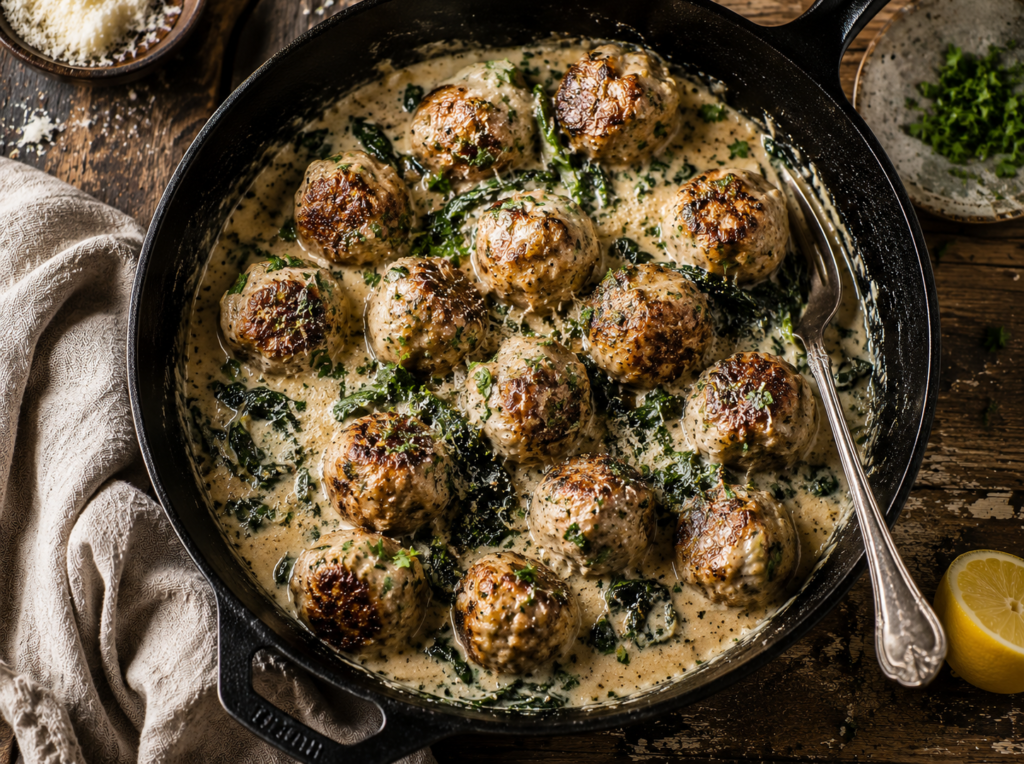
Picture this: tender, herb-flecked chicken meatballs simmered in a silky garlic-parmesan cream sauce, with wilted spinach folded right in. It’s rich without being heavy, it comes together faster than you’d think, and it’s the kind of dish that makes a random Tuesday night feel a little special. Whether you’re spooning it over pasta, mashed potatoes, or just eating it straight out of the skillet (no judgment here), this recipe is a total winner for busy weeknights and lazy Sunday dinners alike.
Ready to get into it? Let’s cook.
Ingredients
Here’s your full shopping list, broken down by component so nothing gets lost in the shuffle.
For the Meatballs:
- 1 ½ lbs ground chicken (a mix of dark and white meat works best for juiciness — look for 93% lean, not 99% fat-free, or they’ll dry out)
- ½ cup panko breadcrumbs (plain or Italian-seasoned)
- ¼ cup grated Parmesan cheese
- 1 large egg
- 2 cloves garlic, minced
- 2 tablespoons fresh parsley, chopped (or 2 teaspoons dried)
- ½ teaspoon dried oregano
- ½ teaspoon salt
- ¼ teaspoon black pepper
- 2 tablespoons olive oil (for searing)
For the Florentine Sauce:
- 2 tablespoons butter
- 3 cloves garlic, minced
- 1 small yellow onion, finely diced
- 1 ½ cups chicken broth (low sodium preferred)
- 1 cup heavy cream
- ½ cup grated Parmesan cheese
- 3 cups fresh baby spinach, roughly chopped
- ½ teaspoon Italian seasoning
- ¼ teaspoon red pepper flakes (optional, for a little kick)
- Salt and pepper, to taste
- Squeeze of fresh lemon juice (optional, but brightens everything up)
To Serve (optional but recommended):
- 8 oz pasta of your choice (fettuccine or penne are great), or mashed potatoes, or crusty bread
Essential Kitchen Tools & Appliances
Before you start, it helps to have everything laid out. Here’s what you’ll need:
- Large mixing bowl (for the meatball mixture)
- Baking sheet or plate (to hold shaped meatballs before cooking)
- Large deep skillet or sauté pan with a lid (this is where the magic happens — you’ll sear the meatballs and make the sauce in the same pan)
- Wooden spoon or silicone spatula
- Measuring cups and spoons
- Sharp knife and cutting board (for the garlic, onion, and parsley)
- Box grater or microplane (if grating your own Parmesan — always tastes better than pre-shredded)
- Meat thermometer (optional, but handy for checking the meatballs hit 165°F)
- Ice cream scoop or tablespoon (makes shaping evenly sized meatballs so much easier)
Cooking Timing and Preparation Steps
Let’s break this down nice and simple, step by step, before anything hits the heat.
Step 1: Prep your ingredients (10 minutes) Mince your garlic, dice your onion, and chop your parsley and spinach. Having everything prepped ahead of time makes the actual cooking process smooth and stress-free.
Step 2: Mix the meatball mixture (5 minutes) In your large mixing bowl, combine the ground chicken, breadcrumbs, Parmesan, egg, minced garlic, parsley, oregano, salt, and pepper. Mix gently with your hands or a spatula — just until combined. Overmixing makes tough meatballs, so go easy.
Step 3: Shape the meatballs (5-7 minutes) Using your scoop or tablespoon, portion out the mixture and roll into balls about 1.5 inches wide (you should get around 20-24 meatballs). Place them on your baking sheet as you go.
Step 4: Let them rest (5 minutes, optional) If you have a few extra minutes, let the shaped meatballs sit in the fridge while you prep your sauce ingredients. This helps them firm up and hold together better when searing.
Total prep time: roughly 25-30 minutes.
Cooking/Baking Instructions
Now for the fun part — actually cooking everything.
Step 1: Sear the meatballs (8-10 minutes) Heat the olive oil in your large skillet over medium heat. Once hot, add the meatballs in a single layer (work in batches if needed — don’t crowd the pan). Sear for 2-3 minutes per side until golden brown on the outside. They don’t need to be fully cooked through yet; they’ll finish in the sauce. Remove and set aside on a plate.
Step 2: Build the sauce base (4-5 minutes) In the same skillet, add the butter and let it melt, scraping up any browned bits from the meatballs (that’s flavor gold, don’t waste it). Add the diced onion and cook for 2-3 minutes until softened, then add the garlic and cook for another 30 seconds until fragrant.
Step 3: Add the liquid (2 minutes) Pour in the chicken broth and let it simmer for a minute to reduce slightly. Then stir in the heavy cream, Italian seasoning, and red pepper flakes if using. Bring to a gentle simmer — don’t let it boil hard, or the cream can separate.
Step 4: Return the meatballs to the pan (12-15 minutes) Nestle the seared meatballs back into the sauce. Cover and let simmer on medium-low heat for 12-15 minutes, until the meatballs reach an internal temperature of 165°F and the sauce has thickened slightly.
Step 5: Finish with spinach and Parmesan (2-3 minutes) Stir in the chopped spinach and Parmesan cheese. Cook uncovered for another 2-3 minutes, just until the spinach wilts down and the sauce turns beautifully creamy. Taste and adjust salt, pepper, and a squeeze of lemon juice if you’d like a little brightness.
Secret tip: Don’t skip searing the meatballs first, even though it’s tempting to save time. That golden crust locks in juiciness and adds a depth of flavor to the sauce that you just can’t get by simmering raw meatballs straight away.
Total cook time: about 30 minutes.
Serving Suggestions
This dish is pretty flexible when it comes to serving. Here are some of my favorite ways to plate it up:
- Over pasta: Toss cooked fettuccine or penne right into the sauce for a full one-pan meal.
- Over mashed potatoes: The creamy sauce soaks into fluffy mashed potatoes in the best way.
- With crusty bread: Perfect for sopping up every last bit of that Parmesan cream sauce.
- Low-carb option: Serve over zucchini noodles or cauliflower rice.
For garnish, a sprinkle of extra Parmesan, a few fresh basil or parsley leaves, and a light crack of black pepper make it look (and taste) like something from a restaurant menu. A side salad with a light vinaigrette also balances out the richness nicely.
Additional Tips
Want to take this recipe up a notch? Here are some ideas:
- Add mushrooms: Sauté sliced mushrooms with the onions for extra umami flavor.
- Make it spicier: Increase the red pepper flakes or add a dash of hot sauce to the sauce.
- Sun-dried tomatoes: Toss in a handful of chopped sun-dried tomatoes for a pop of tangy sweetness (this turns it into a Tuscan-style dish, which is equally amazing).
- Lighter version: Swap the heavy cream for half-and-half or whole milk mixed with a tablespoon of flour to thicken, and use turkey instead of chicken.
- Gluten-free: Use gluten-free breadcrumbs or crushed pork rinds in the meatball mix, and double check your broth is gluten-free.
- Meal prep friendly: These meatballs freeze beautifully. Make a double batch and freeze extras (sauce and all) in an airtight container for up to 3 months.
Nutrition Details
Here’s the approximate nutritional breakdown per serving (based on 4 servings, meatballs and sauce only, not including pasta or sides):
| Nutrient | Amount per Serving |
|---|---|
| Calories | 420 kcal |
| Protein | 32g |
| Carbohydrates | 9g |
| Fat | 29g |
| Saturated Fat | 14g |
| Fiber | 1g |
| Sugar | 2g |
| Sodium | 680mg |
| Cholesterol | 165mg |
Note: Nutritional values are estimates and can vary based on specific brands and ingredient substitutions used.
FAQ Section
Can I use ground turkey instead of chicken? Absolutely. Ground turkey works as a 1:1 swap and gives a similar texture and flavor.
How do I store leftovers? Store in an airtight container in the fridge for up to 3-4 days. Reheat gently on the stovetop over low heat, adding a splash of broth or cream if the sauce has thickened too much.
Can I freeze this dish? Yes! Freeze the cooked meatballs and sauce together in a freezer-safe container for up to 3 months. Thaw overnight in the fridge before reheating.
What can I use instead of heavy cream? Half-and-half, whole milk with a bit of flour whisked in, or even coconut cream (for a dairy-free twist, though it will change the flavor slightly) all work as substitutes.
Can I make this healthier? Definitely. Use lean ground chicken breast, swap heavy cream for Greek yogurt or a light cream alternative, and load up on extra spinach for added nutrients without extra calories.
Can I bake the meatballs instead of pan-searing them? Yes — bake at 400°F for about 15 minutes until golden, then transfer them into the simmering sauce to finish cooking through.
Wrap-Up
And there you have it — Chicken Florentine Meatballs, a dish that takes everything you love about creamy, garlicky, spinach-studded comfort food and turns it into an easy, crowd-pleasing dinner. It’s rich, it’s satisfying, and it comes together in well under an hour, which makes it perfect for both weeknight dinners and casual entertaining.
Fun fact: “Florentine” as a culinary term traces back to Catherine de’ Medici, who reportedly brought her love of spinach from Florence, Italy, to the French court in the 16th century. Ever since, any dish featuring spinach has proudly worn the “Florentine” name. So really, when you make this recipe, you’re serving up a little slice of culinary history along with dinner.
Give it a try this week — I promise it’ll earn a permanent spot in your dinner rotation.