
Introduction
Okay, real talk — ragu made with ground beef is fine. It’s weeknight fine. But short rib ragu? That’s the stuff that makes people put their fork down and just stare at their plate for a second.
Here’s the deal: short ribs are cheap-ish, forgiving, and packed with connective tissue that melts into pure silky richness after a low, slow braise. You’re not “cooking meat” so much as coaxing it into falling apart with a spoon. Toss that shredded, wine-soaked beef with a deep tomato sauce and pile it onto pappardelle, and you’ve basically made restaurant food in your own kitchen — for less than the price of takeout.
It’s a weekend project, not a weeknight one, but most of that time is hands-off. You’re not babysitting a pot; you’re doing laundry while your oven does the heavy lifting. Let’s get into it.
Ingredients
Here’s your full shopping list. I’ve broken it into the braise and the pasta/serving side so nothing gets forgotten at the store.
For the short ribs:
- 3 lbs bone-in beef short ribs (English cut, about 4-5 pieces)
- 1 tsp kosher salt, plus more to taste
- ½ tsp freshly ground black pepper
- 2 tbsp olive oil
For the ragu base:
- 1 medium onion, diced
- 2 medium carrots, diced
- 2 celery stalks, diced
- 4 cloves garlic, minced
- 2 tbsp tomato paste
- 1 cup dry red wine (a Chianti or Cabernet Sauvignon works great — nothing you wouldn’t drink)
- 1 can (28 oz) tomatoes, crushed
- 2 cups beef stock (low-sodium if possible)
- 2 bay leaves
- 1 tsp dried oregano
- ½ tsp dried thyme (or 2-3 fresh sprigs)
- 1 Parmesan cheese rind (optional but a total game-changer for depth)
For serving:
- 1 lb pappardelle or wide egg noodles
- ½ cup freshly grated Parmesan cheese, plus more for topping
- 2 tbsp fresh parsley, chopped, for garnish
- Crusty bread, for the table (non-negotiable, in my opinion)
A heavy enameled Dutch oven (like a Le Creuset or Lodge enameled cast iron) makes a real difference here since it holds heat evenly through that long braise.
Essential Kitchen Tools & Appliances
Get these out and staged before you start chopping — it makes the whole process smoother:
- Large Dutch oven with a tight-fitting lid (5-7 quart size)
- Sharp chef’s knife
- Cutting board
- Tongs (for flipping the ribs)
- Wooden spoon or heat-safe spatula
- Measuring cups and measuring spoons
- Large pot for boiling pasta
- Colander
- Two forks (for shredding the meat)
- Ladle
- Meat thermometer (optional, but handy for peace of mind)
Cooking Timing and Preparation Steps
Let’s break this down step by step so you know exactly what to do before the oven even turns on.
Step 1: Prep your vegetables (10 minutes). Dice your onion, carrots, and celery into small, even pieces. Mince your garlic. Having this all ready before you start cooking is key, because once the ribs are searing, things move fast.
Step 2: Season the short ribs (5 minutes). Pat the short ribs completely dry with paper towels — this is the secret to a good sear. Season generously on all sides with the kosher salt and black pepper.
Step 3: Preheat the oven (5 minutes). Set your oven to 325°F (163°C). This low temperature is what gives you that fall-apart texture without drying out the meat.
Step 4: Gather your liquids. Measure out your wine, crushed tomatoes, and beef stock so they’re within arm’s reach of the stove. Trust me, you don’t want to be measuring wine while onions are burning.
Total prep time: about 20-25 minutes. Once that’s done, you’re ready for the real cooking.
Cooking Instructions
Now for the fun part — turning all that prepped stuff into dinner.
1. Sear the short ribs (10-12 minutes). Heat the olive oil in your Dutch oven over medium-high heat until shimmering. Working in batches (don’t crowd the pot), sear the short ribs on all sides until deeply browned, about 2-3 minutes per side. This step builds the flavor foundation for the entire dish, so don’t rush it. Remove the ribs and set aside on a plate.
2. Sauté the vegetables (6-8 minutes). In the same pot (all that browned beef flavor stuck to the bottom is gold), add the onion, carrots, and celery. Cook over medium heat, stirring occasionally, until softened, about 5-6 minutes. Add the garlic and tomato paste, and cook for another 1-2 minutes until fragrant and the tomato paste darkens slightly.
3. Deglaze with wine (3-4 minutes). Pour in the red wine, scraping up all those browned bits from the bottom of the pot with your wooden spoon. Let it simmer for 3-4 minutes until slightly reduced.
4. Build the braise. Stir in the crushed tomatoes, beef stock, bay leaves, oregano, and thyme. Nestle the short ribs back into the pot, along with any juices that collected on the plate. If using, tuck in the parmesan rind. The liquid should come about two-thirds of the way up the ribs — top up with a splash more stock if needed.
5. Braise low and slow (2.5-3 hours). Bring everything to a gentle simmer on the stovetop, then cover and transfer to your preheated 325°F oven. Cook for 2.5 to 3 hours, until the meat is fork-tender and pulling away from the bone.
Insider tip: resist the urge to open the oven and peek every 20 minutes. Every time you lift that lid, you let out heat and moisture the dish needs to work its magic.
6. Shred and finish (15 minutes). Remove the pot from the oven. Take out the short ribs, discard the bones, and shred the meat with two forks. Discard the bay leaves and parmesan rind. Skim off any excess fat floating on top of the sauce. Return the shredded meat to the pot and stir it into the sauce. Simmer uncovered on the stove for 10-15 minutes to thicken slightly.
7. Cook the pasta (10-12 minutes). While the sauce finishes, boil your pappardelle in generously salted water according to package instructions until al dente. Reserve ½ cup of pasta water before draining.
8. Combine (2-3 minutes). Toss the drained pasta directly into the pot with the ragu, adding a splash of that reserved pasta water to help everything cling together nicely. Stir in the grated Parmesan.
Serving Suggestions
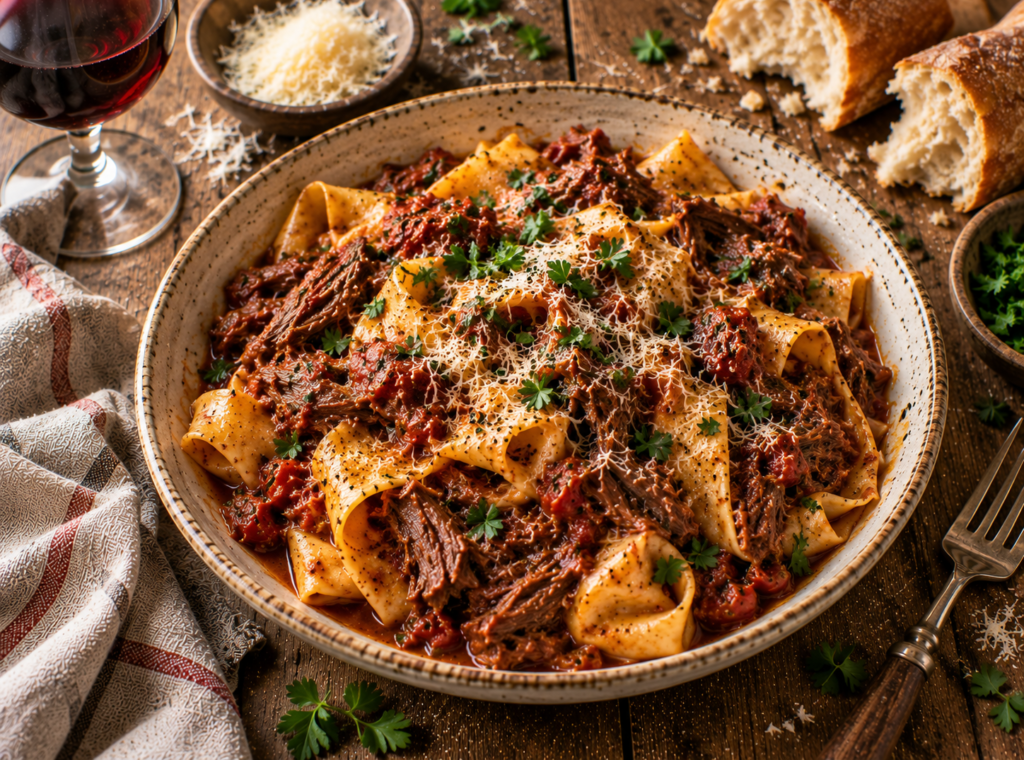
Plate the pasta in shallow bowls, twirling it up high for that restaurant-style presentation. Top with an extra shower of freshly grated Parmesan and a sprinkle of chopped parsley for a pop of color.
On the side, keep it simple: a crisp arugula salad with lemon vinaigrette cuts through the richness beautifully, and warm, crusty bread is essential for mopping up every last bit of sauce. A glass of the same red wine you cooked with rounds out the meal perfectly.
Additional Tips
- Make it ahead: This ragu tastes even better the next day, once the flavors have had time to meld. Make it a day ahead and just reheat gently before serving.
- Freezer-friendly: The sauce (without pasta) freezes beautifully for up to 3 months. Thaw overnight in the fridge and reheat on the stove.
- Slow cooker version: After searing and sautéing, transfer everything to a slow cooker and cook on low for 7-8 hours instead of using the oven.
- Gluten-free swap: Use your favorite gluten-free pasta, or serve the ragu over creamy polenta instead.
- Flavor booster: A splash of balsamic vinegar stirred in at the end adds a lovely tangy depth.
- Spice it up: Add a pinch of red pepper flakes with the garlic if you like a little heat.
Nutrition Details
Approximate values per serving (based on 6 servings, including pasta):
| Nutrient | Amount |
|---|---|
| Calories | 620 kcal |
| Protein | 38 g |
| Carbohydrates | 52 g |
| Fat | 26 g |
| Saturated Fat | 9 g |
| Fiber | 4 g |
| Sugar | 7 g |
| Sodium | 610 mg |
Note: values are estimates and will vary based on specific brands and portion sizes used.
FAQ Section
Can I use boneless short ribs instead? Yes, and it works great. Boneless ribs cook a bit faster, so start checking for tenderness around the 2-hour mark.
How do I store leftovers? Keep leftovers in an airtight container in the fridge for up to 4 days, or freeze the sauce for up to 3 months.
What can I substitute for red wine? If you’d rather skip the wine, swap in an equal amount of additional beef stock with a splash of balsamic vinegar for acidity.
Can I make this healthier? Trim visible fat from the short ribs before searing, and skim the sauce well after braising to cut down on overall fat content. Whole wheat or lentil pasta also boosts the fiber count.
Why is my sauce too thin? Simply simmer it uncovered for a bit longer after shredding the meat back in — this reduces the liquid and thickens things up naturally.
Wrap-Up
And there you have it — a rich, deeply comforting beef short rib ragu that’s honestly worth every minute of that slow braise. It’s the kind of dish that turns an ordinary Sunday into something special, filling the house with the kind of smell that makes everyone wander into the kitchen asking “what’s for dinner?”
Fun fact: ragu-style braises like this one trace back to Northern Italian cooking traditions, where tougher cuts of meat were slow-cooked for hours to become tender enough for a proper Sunday family meal — proof that some of the best recipes were born out of patience, not fancy ingredients. Give it a try this weekend, and don’t be surprised if it becomes a regular request at your table.