
1. Introduction
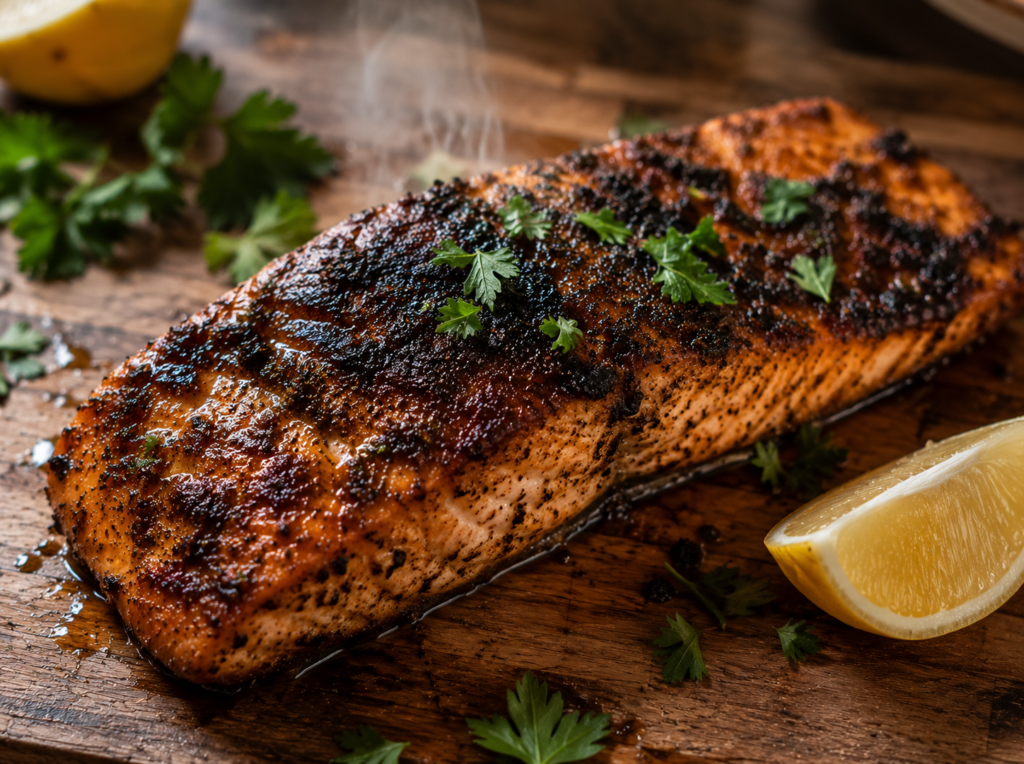
Okay, real talk — blackened salmon is one of those recipes that looks fancy but is honestly one of the easiest weeknight dinners you’ll ever make. You’re basically coating a salmon fillet in a smoky, peppery spice blend, then searing it in a screaming-hot pan until it forms this deep, almost-charred crust on the outside while staying soft and flaky inside. That contrast? Chef’s kiss.
This dish started in Louisiana with Cajun chef Paul Prudhomme, who literally invented the “blackening” technique back in the 1980s, and it’s been a steakhouse and seafood-shack favorite ever since. The best part is you don’t need a culinary degree or a ton of ingredients — just a hot pan, a good spice mix, and about 15 minutes of your life. It’s spicy, smoky, a little buttery, and honestly kind of addictive once you try it.
2. Ingredients
Here’s your shopping list. Measurements are for 4 salmon fillets, so scale up or down depending on how many people you’re feeding.
For the salmon:
- 4 salmon fillets (6 oz each), skin-on or skinless, patted dry
- 2 tablespoons unsalted butter, melted (or sub olive oil for a dairy-free version)
- 1 tablespoon olive oil or another high-smoke-point oil for searing
For the blackening spice blend:
- 2 teaspoons smoked paprika
- 1 teaspoon garlic powder
- 1 teaspoon onion powder
- 1 teaspoon dried thyme
- 1 teaspoon dried oregano
- ½ teaspoon cayenne pepper (add more if you like it spicier)
- ½ teaspoon black pepper, freshly ground
- ½ teaspoon salt (kosher works best)
- ¼ teaspoon cayenne pepper — optional extra kick
For serving (optional but recommended):
- 1 lemon, cut into wedges
- 2 tablespoons fresh parsley, chopped
- 1 tablespoon extra butter for finishing
A quick tip: if you want to save time, you can mix up a double batch of the spice blend ahead of time and keep it in a jar. It works on chicken and shrimp too, so it’s worth having on hand.
3. Essential Kitchen Tools & Appliances
Before you start, here’s what you’ll want within reach:
- A cast-iron pan — this is the MVP for getting that authentic blackened crust. A regular heavy-bottomed stainless steel pan works too, but cast iron holds heat best.
- A silicone spatula — thin and flexible, makes flipping salmon so much easier without it falling apart
- Paper towels, for patting the salmon dry (this step matters more than people think!)
- A small mixing bowl for combining your spice blend
- Measuring spoons
- A meat thermometer to check doneness without guessing
- Tongs, for handling the fillets
- A kitchen exhaust fan or open window — blackening creates smoke, so ventilation is your friend here!
4. Cooking Timing and Preparation Steps
Let’s break this down step by step so everything’s ready before the pan gets hot.
- Pat the salmon dry. Use paper towels to remove as much moisture as possible from both sides. This is key for getting a good crust instead of a steamed, soggy one.
- Mix your spice blend. In a small bowl, combine the smoked paprika, garlic powder, onion powder, thyme, oregano, cayenne, black pepper, and salt. Stir until evenly mixed.
- Brush the salmon with melted butter. This helps the spice blend stick and adds richness.
- Coat each fillet generously. Press the spice mix onto both sides of the salmon, making sure it’s fully covered — don’t be shy here, this is where all the flavor comes from.
- Let it rest for 5–10 minutes at room temperature while your pan heats up. This helps it cook more evenly.
- Preheat your skillet. Set it over medium-high heat and let it get properly hot — about 3-4 minutes — before adding any oil. A hot pan is non-negotiable for that blackened crust.
Total prep time: about 15 minutes.
5. Cooking Instructions
- Add the oil. Once your skillet is hot, add the avocado oil and swirl to coat the pan.
- Sear the salmon. Place the fillets in the pan, spice-side down first (if skin-on, start flesh-side down). You should hear an immediate sizzle — that’s the sound of a good crust forming.
- Cook for 3–4 minutes per side. Don’t move the fillets around — let them sit so the crust develops properly. Flip once using your fish spatula.
- Check for doneness. Salmon is done when it reaches an internal temperature of 130–135°F for medium, or flakes easily with a fork. This usually takes 6-8 minutes total depending on thickness.
- Add a pat of butter in the last minute of cooking and spoon it over the fillets for extra richness and shine.
- Rest for 2 minutes before serving — this lets the juices redistribute so it stays moist.
Insider tip: Don’t walk away from the pan! Blackening spices can go from perfectly charred to burnt in under a minute once the pan is hot. Keep the heat at medium-high, not full blast, if you’re worried about burning the spices before the fish cooks through.
6. Serving Suggestions
Blackened salmon is bold enough to be the star, so keep the sides simple and fresh to balance it out:
- A squeeze of fresh lemon juice right before serving cuts through the smokiness beautifully
- Sprinkle with fresh chopped parsley for color and freshness
- Pair with a light salad, garlic butter rice, or roasted asparagus
- For a heartier plate, serve over creamy grits or mashed potatoes — the buttery base soaks up the spice really well
- A dollop of avocado or a cool yogurt-lime sauce on the side helps mellow the heat if you went heavy on the cayenne
7. Additional Tips
- Want it milder? Cut the cayenne in half or leave it out entirely — the smoked paprika alone still gives great flavor and color.
- No cast iron? A heavy stainless steel or carbon steel pan works fine, just make sure it’s fully preheated.
- Dairy-free version: Swap the butter for olive oil or avocado oil throughout.
- Low-carb/keto friendly: This recipe is naturally low-carb as is — just watch your side dishes.
- Meal prep friendly: Make extra spice blend and store it in an airtight container for up to 3 months, so future you can whip this up even faster.
- Other proteins: This same spice blend and method works great on chicken breasts, shrimp, or even tofu if you want to switch things up.
8. Nutrition Details
Per serving (1 fillet, based on a 6 oz portion):
| Nutrient | Amount |
|---|---|
| Calories | 320 kcal |
| Protein | 34g |
| Total Fat | 20g |
| Saturated Fat | 6g |
| Carbohydrates | 2g |
| Fiber | 0.5g |
| Sugar | 0g |
| Sodium | 480mg |
| Omega-3 Fatty Acids | ~2,200mg |
Note: Values are estimates and will vary based on exact ingredients and portion sizes used.
9. FAQ Section
Can I make this without a cast iron skillet? Yes! Any heavy-bottomed pan that holds and distributes heat well will work. Just make sure it’s very hot before adding the salmon.
How do I store leftovers? Keep leftover salmon in an airtight container in the fridge for up to 2 days. Reheat gently in a pan over low heat or enjoy cold over a salad the next day.
Can I use frozen salmon? Absolutely, just make sure it’s fully thawed and patted very dry before seasoning — excess moisture is the enemy of a good crust.
How do I make this healthier? Use olive oil instead of butter, go light on the salt, and pair it with a veggie-forward side like a big salad or steamed greens.
Is blackened salmon very spicy? It has a nice kick from the cayenne and black pepper, but it’s more smoky-savory than fire-hot. Adjust the cayenne to taste if you’re spice-sensitive.
Can I bake this instead of pan-searing? You can, but you won’t get the same charred crust. If baking, roast at 400°F for about 12-15 minutes, then broil for the last 1-2 minutes for some color.
10. Wrap-Up
And that’s it — restaurant-quality blackened salmon in about 20 minutes, no fancy equipment required. It’s smoky, a little spicy, buttery, and has that gorgeous charred crust that makes it feel way fancier than the effort it actually takes. Fun fact: the “blackening” technique became so popular in the 80s that it reportedly caused a run on Cajun spices and cast iron skillets across the U.S. — chefs everywhere were trying to recreate Paul Prudhomme’s magic in their own kitchens. Once you try it yourself, you’ll get why. This one’s a keeper for busy weeknights and impressing dinner guests alike.