
1. Introduction🥣
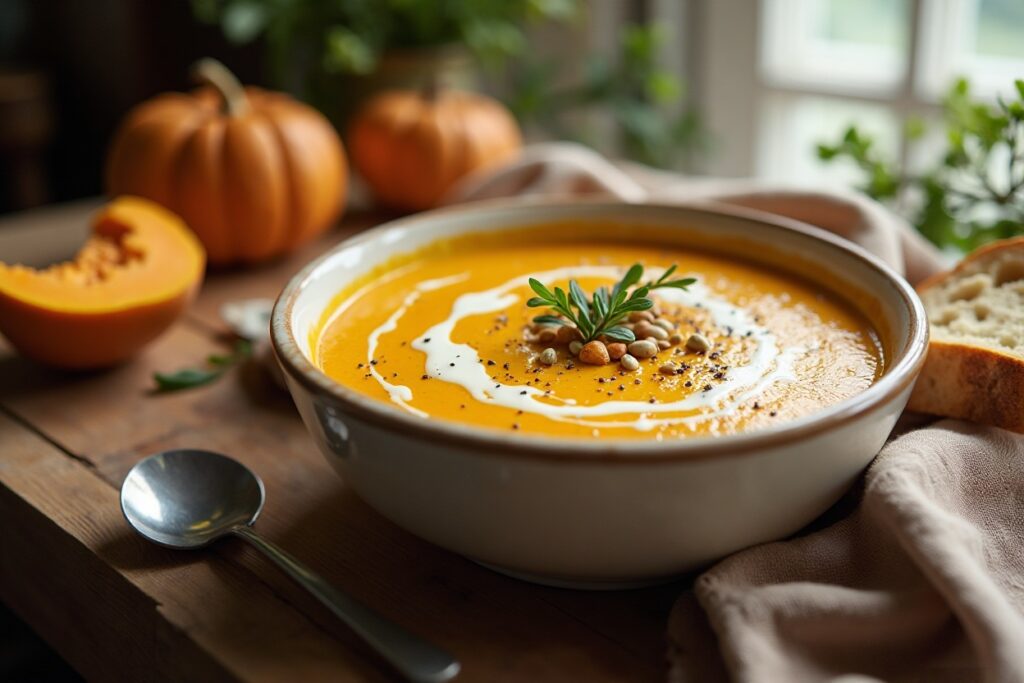
Roasted butternut squash soup is the kind of dish that feels like a warm hug. Roasting the squash (and sometimes onions/garlic) brings out its natural sweetness and caramelizes the edges, giving the soup depth of flavor you won’t get from just boiling. The result is a creamy, silky soup that’s comforting, nourishing, and versatile.
Why it’s a winner:
- It’s naturally vegetarian (and easily vegan)
- You can make it in batches and reheat
- It’s forgiving — you can tweak the spices, creaminess, or thickness
- It’s full of good stuff (vitamins, fiber, antioxidants)
2. Ingredients
| Ingredient | Quantity | Notes / alternatives |
|---|---|---|
| Butternut squash | ~ 1.5 to 2 kg (3.3–4.4 lb) | Peel, seed, and cube (or cut in halves) |
| Onion | 1 large (or 2 small) | Yellow or sweet onion works well |
| Garlic | 3–4 cloves | Whole or roughly chopped |
| Carrot | 1 medium | Optional, adds a bit more sweet depth |
| Olive oil | 2 tbsp (plus extra for drizzling) | Use extra-virgin if possible |
| Vegetable broth | 4 cups (≈ 1 L) | For non-veg version, you can use low-sodium chicken broth |
| Coconut milk or heavy cream | ½ cup | For extra creaminess (optional) |
| Ground nutmeg | ⅛ tsp | Optional, gives warmth |
| Ground ginger | ⅛ tsp | Optional, adds dimension |
| Salt | To taste | Start with ~ ½ tsp and adjust |
| Black pepper | To taste | Freshly ground is best |
| Maple syrup / Honey | 1 tsp (optional) | If your squash isn’t quite sweet enough |
| Garnishes | To your taste | E.g. toasted pepitas, fresh herbs (thyme, sage, parsley), swirl of cream or coconut milk, croutons, crispy bacon bits (if non-veg) |
3. Essential Kitchen Tools & Appliances
- Large roasting pan or rimmed baking sheet
- Large soup pot (heavy bottom, 4–6 quart)
- Chef’s knife (sharp)
- Cutting board
- Measuring cups and spoons
- Mixing bowl
- Spatula or Wooden spoon
- Immersion (hand) blender or high-power countertop blender
- Ladle and Oven mitts
- Serving bowls and ladle for serving
- Optional garnishing tools: small skillet for toasting seeds, spoon for drizzling
If you don’t have an immersion blender, the Kent Hand Blender is a great pick.
4. Preparation Steps (Before Cooking)
Let’s prep everything step by step:
- Preheat your oven to 425 °F (about 220 °C).
- Wash & dry produce.
- Peel the butternut squash. Using a sturdy vegetable peeler, peel off the skin. Cut off the ends, then slice the squash in half (lengthwise). Scoop out seeds and stringy bits using a spoon. Alternatively, you can cube it after peeling.
- Cube the squash. Aim for ~1–1.5-inch (2.5–4 cm) cubes so they roast evenly.
- Peel and roughly chop the onion and carrot (if using).
- Peel garlic. You can leave garlic cloves whole (they’ll get soft when roasted) or lightly smash them.
- Toss vegetables. In a mixing bowl, toss the squash cubes, onion, carrot, and garlic with about 1 tablespoon of olive oil. Sprinkle with a bit of salt and pepper, and toss again so everything is lightly coated.
- Arrange on roasting sheet. Spread the vegetables evenly on the baking sheet (in one layer, minimal overlap) for better caramelization.
Now you’re ready to roast.
5. Cooking / Roasting & Blending Instructions
Here’s how to turn that prepped produce into silky soup:
Roasting
- Roast vegetables. Put the baking sheet in the preheated oven. Roast for 30–40 minutes, until the squash is fork-tender and the edges are nicely browned or caramelized. (Some recipes roast the squash cut-side down for the first 30 minutes. Downshiftology+2Cookie and Kate+2)
- Flip halfway (optional). If some pieces seem to be browning faster, you can gently turn them after ~20 minutes to ensure more even roasting.
Simmering & Blending
- Heat broth. While the vegetables roast, in your soup pot bring the vegetable broth to a gentle simmer.
- Combine roasted vegetables + broth. Once the squash & co are roasted, transfer them (including any accumulated juices) into the pot with the broth. Be cautious — the pan and contents are hot.
- Add spices & seasoning. Stir in nutmeg, ginger, salt, and pepper. If you like sweetness in your soup, add the maple syrup or honey now.
- Simmer briefly. Let everything simmer together for ~5–10 minutes to allow flavors to meld.
- Blend to smoothness. Use your immersion blender to puree directly until silky. If using a countertop blender, carefully ladle soup in batches into the blender, blend, and return to pot (watch for steam).
- Add creaminess. If you like a richer texture, stir in coconut milk or heavy cream. Warm through (don’t boil vigorously after adding cream).
- Taste & adjust. Taste and adjust salt, pepper, or sweetness. If the soup is too thick, add a splash more broth or water.
Timing summary:
- Roasting: 30–40 min
- Simmer & blending: ~10–15 min
- Total: ~45–60 min
Pro tips / “secrets” to level it up:
- Don’t overcrowd your roasting pan — spacing helps caramelization.
- Use high heat for roasting (425 °F / ~220 °C) for better browning.
- Roast the garlic whole (lightly crushed) — it softens and mellows.
- If you like extra depth, roast a halved onion or shallot alongside the squash.
- For added flavor: add a sprig of fresh thyme or a sage leaf in the pot while simmering (remove before blending).
- To make it extra creamy (without dairy), you can soak ½ cup raw cashews in water for 30 minutes, drain, and blend them in.
6. Serving Suggestions
Once your soup is ready:
- Ladle into warmed bowls.
- Garnish options:
- A swirl of cream, coconut milk, or Greek yogurt
- Toasted pepitas or pumpkin seeds
- Fresh herbs: chopped parsley, chives, thyme, or sage
- Croutons or garlic croutons
- Crispy bacon bits (if not vegan)
- A drizzle of good olive oil
- Freshly ground black pepper
- Serving sides:
- Crusty bread (like sourdough or baguette)
- Garlic bread
- Grilled cheese sandwich
- Green salad
- Roasted vegetables or a side of protein (chicken, fish, tofu)
7. Additional Tips & Tweaks
- Make ahead & storage: Let the soup cool, then store in an airtight container in the fridge for up to 4–5 days. For longer storage, freeze in portions (freezer-safe jars or bags) for up to 2–3 months. Thaw overnight in fridge, then gently reheat.
- Adjust thickness: If your soup is too thick, add more broth or water; if too thin, simmer a bit longer to reduce.
- Spice variations: Add a dash of smoked paprika, curry powder, or cayenne for heat.
- Protein boost: Serve with a spoon of Greek yogurt, add shredded chicken, or top with crispy chickpeas.
- Vegan / dairy-free: Use coconut milk or cashew cream instead of heavy cream. Use vegetable broth.
- Lower sodium option: Use low-sodium broth and go easy with added salt.
- Extra depth: Stir in a bit of miso paste or white wine before blending (just a small amount) for additional umami.
- Color & flavor tweak: For a vibrant color, use a bit of carrot or sweet potato in the roast mix.
- To reheat: Use gentle medium heat and stir occasionally; if too thick, add a bit of broth or water.
8. Nutrition Details (Approximate)
Here’s an estimated nutritional breakdown per serving (assuming ~6 servings). Values are approximate and depend on size of squash, amount of cream, etc.
| Nutrient | Amount per serving |
|---|---|
| Calories | ~ 200–300 kcal* |
| Protein | ~ 3–5 g |
| Carbohydrates | ~ 25–35 g |
| Dietary Fiber | ~ 4–6 g |
| Total Fat | ~ 8–12 g |
| Saturated Fat | ~ 2–4 g (depending on cream) |
| Sugar (natural) | ~ 6–10 g |
| Sodium | depends on broth & added salt |
| Vitamin A / Beta-Carotene | high (from squash) |
| Vitamin C | moderate |
| Potassium, fiber, antioxidants | good amounts |
* For example, one version calculates ~ 277 calories per serving when using cream. Have A Plant
Another more “light” version (no heavy cream) is ~ 130 kcal per cup. Mayo Clinic MC Press
9. FAQ / Troubleshooting
Q: Can I skip roasting and just boil everything?
A: Yes, but roasting gives deeper, sweeter flavor and caramelization. Boiling produces a flatter taste.
Q: What if I don’t have an immersion blender?
A: Use a countertop blender in batches (cool slightly, fill halfway, blend, return). Be cautious of hot splashes.
Q: How do I store leftovers?
A: Fridge: 4–5 days in airtight container. Freeze: up to 2–3 months in freezer-safe containers.
Q: Can I substitute sweet potato or pumpkin?
A: Absolutely. You can use part pumpkin, sweet potato, or even carrots to adjust texture or flavor. Many recipes use a mix (e.g. butternut + pumpkin). Recipe Runner+1
Q: How to make it lower calorie / lighter?
A: Skip or reduce cream/coconut milk; use low-sodium broth; skip added sweeteners; serve smaller portions.
Q: Why did my soup become stringy or grainy?
A: That can happen if it’s overcooked or the blender overheats. Blend in shorter bursts, cool slightly, or use a high-quality blender.
10. Wrap-Up
In summary: roast your squash and aromatics, simmer briefly with broth and seasonings, then blend into a silky, cozy soup. It’s perfect for chilly evenings or when you want something comforting yet full of nourishing vegetables.
Fun fact / story:
Squash soups like this are classic in autumn & winter — the technique of roasting vegetables before blending is a modern twist that enhances flavor. In many cuisines, pureed squash or gourd soups have been a staple for centuries, especially when fresh produce needed preservation or warming winter meals were essential. Also, the name “butternut squash” comes from its smooth, buttery texture and sweet, nutty flavor. Wikipedia